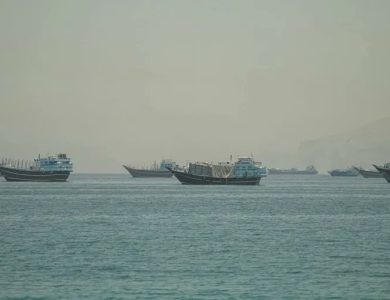


Decline in the Number of Ships Passing Through the Strait of Hormuz
Al-Taj News – Shipping data released on Monday showed that the number of commodity vessels observed passing through the Strait of Hormuz fell to five ships per day at the beginning of the week, as companies are moving cautiously amid continued attacks on vessels.
Data from Kpler showed that traffic at the beginning of the week was limited to smaller vessels. These included two liquefied gas carriers, one of which, according to the data, exited the strait via the Iranian route, while the other sailed in darkness toward India.
On Friday, 14 ships passed through the strait, including a very large crude oil tanker loaded with two million barrels of oil, which exited the strait after switching off its transmitter and receiver.
On June 18, 2026, Washington and Tehran signed a memorandum of understanding on freedom of navigation in the Strait of Hormuz in preparation for reaching a final agreement, but its implementation stalled due to disagreements over the security of the strait.
Between July 8 and 24, the United States resumed its attacks on Iran, while Tehran responded by attacking countries in the region, before talks resumed on safe passages for ships in the Strait of Hormuz.
The United States reimposed the naval blockade on Iranian ports in the Strait of Hormuz after renewed clashes that were described as the fiercest since the ceasefire between the two sides took effect in April.
Iran warned that the resumption of the naval blockade on its ports undermines the memorandum of understanding with Washington.
The war broke out on February 28, when Israel and the United States attacked Iran, prompting Tehran to respond by closing the Strait of Hormuz, which before the war had been the main waterway for nearly one-fifth of global energy supplies.
The Strait of Hormuz is considered one of the main flashpoints in the conflict. Iran’s control over the strait has given it enormous influence, effectively allowing it to hold a bargaining chip.