
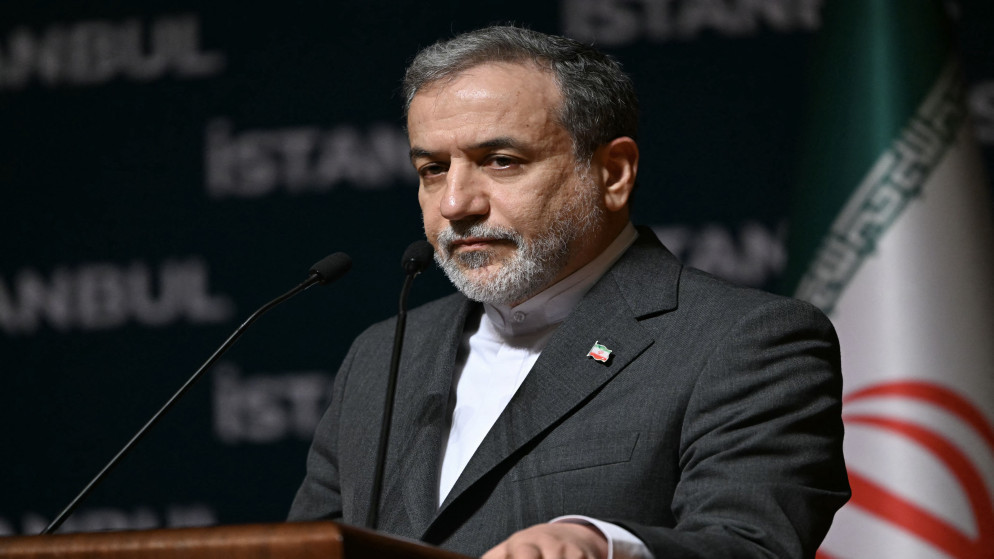
Araghchi: Restoring Diplomacy to the Right Track Is Not Impossible
Al-Taj News – Iranian Foreign Minister Abbas Araghchi said Friday that restoring diplomacy to the right track is not impossible, but depends on the United States realizing that pressure is ineffective.
Araghchi added, via the “X” platform, that the United States should build trust, speak respectfully, recognize Iran’s rights, and fulfill its commitments.
White House spokesperson Karoline Leavitt said Thursday that the United States and Iran are not currently holding any talks to end the war, amid Washington’s focus on economic pressure on Tehran, noting that all options remain “on the table.”
Leavitt added in remarks, “President Donald Trump’s first goal is to ensure that Iran cannot possess a nuclear weapon, and therefore, we carried out Operation Epic Fury to destroy their military. Now we have an operation to destroy their economy.”
She added, “There are no negotiations at the moment, and this will remain the case until the president feels that they may sit at the negotiating table with the aim of achieving results. We have not seen that yet. Of course, he still retains all options, and the naval blockade is still in effect as well.”
Treasury Secretary Scott Bessent announced Monday the expansion of secondary sanctions that can be imposed on entities and countries around the world that maintain trade relations with Iran, as part of the “Economic Outcast” operation against Iran launched by the United States under Trump’s direction, at a time when Washington is significantly escalating its economic pressure on Tehran as the war approaches its sixth month.
Scott said it was “Economic Victory Day,” aimed at issuing a final warning to countries to sever their trade relations with Iran or face the risk of their companies and major entities being cut off from the dollar-based financial system.
He added, “We are waging an economic attack on Iranian financial links around the world. Our goal is to cut every economic lifeline supporting this authoritarian regime until Tehran stands alone.”
Iran has been holding talks with the Sultanate of Oman for weeks, while emphasizing at the same time that the Strait of Hormuz will remain closed unless Washington fulfills its commitments stipulated in the memorandum of understanding concluded in mid-June, which specifically provides for lifting the U.S. blockade and economic sanctions imposed on Tehran.
Islamic Revolutionary Guard Corps spokesman Hossein Mahbi said that if the United States does not accept Iran’s conditions, the Strait of Hormuz will not be opened under any circumstances. However, if it abandons its obstruction and returns to the memorandum of understanding, the Strait of Hormuz can be opened; “therefore, it must accept our conditions.”
On June 18, 2026, Washington and Tehran signed a memorandum of understanding on freedom of navigation in the Strait of Hormuz, paving the way for a final agreement, but its implementation stalled due to disagreements related to the security of the strait.
Between July 8 and 24, the United States resumed its attacks on Iran, while Tehran responded by attacking countries in the region, before talks resumed on safe corridors for ships in the Strait of Hormuz.
The United States reimposed the naval blockade on Iranian ports in the Strait of Hormuz after renewed confrontations that were described as the fiercest since the ceasefire between the two sides took effect in April.
Iran warned that the resumption of the naval blockade on its ports would undermine the memorandum of understanding with Washington.
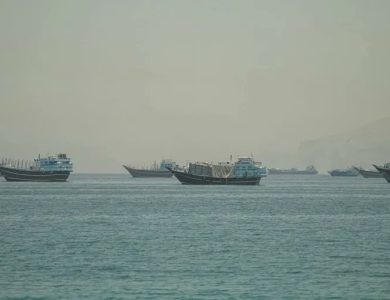
The war broke out on February 28, when Israel and the United States attacked Iran, to which Tehran responded by closing the Strait of Hormuz, which before the war was the main waterway for nearly one-fifth of global energy supplies.
The Strait of Hormuz is considered one of the most prominent flashpoints in the conflict. Iran’s control over the strait has given it enormous leverage, effectively allowing it to hold a powerful bargaining chip.