
From Karak to Amman.. “Toughen Penalties on Tampers,” for Jordanians’ Reassurance “in Bold” Is a Red Line
Al-Taj News – By: Lina Al-Nasser
Nothing is harsher on a homeland than the hand of treachery extending to its sons in their most secure moments, and nothing is more painful than joy turning into anguish, a wake turning into two wakes, and the path taken by a security officer to perform his duty becoming the scene of a treacherous targeting.
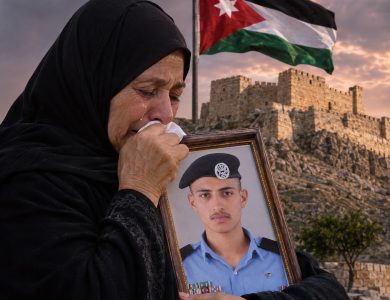
From Karak to Amman, painful scenes follow one another, summarizing the extent of pain experienced by Jordanians; a home opened to receive mourners, and a security officer standing in the street, performing his duty and guarding his people, only for the hand of treachery to reach him. Different scenes, but their ache is one; for when the assault reaches people’s homes and occasions, and when whoever dedicated himself to protecting others is targeted, the matter is no longer merely a passing crime, but a wound that afflicts the entire society.
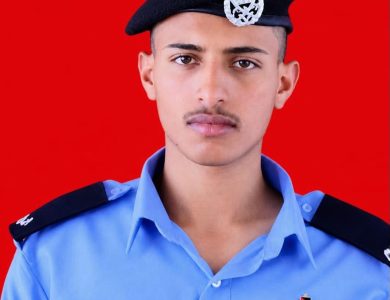
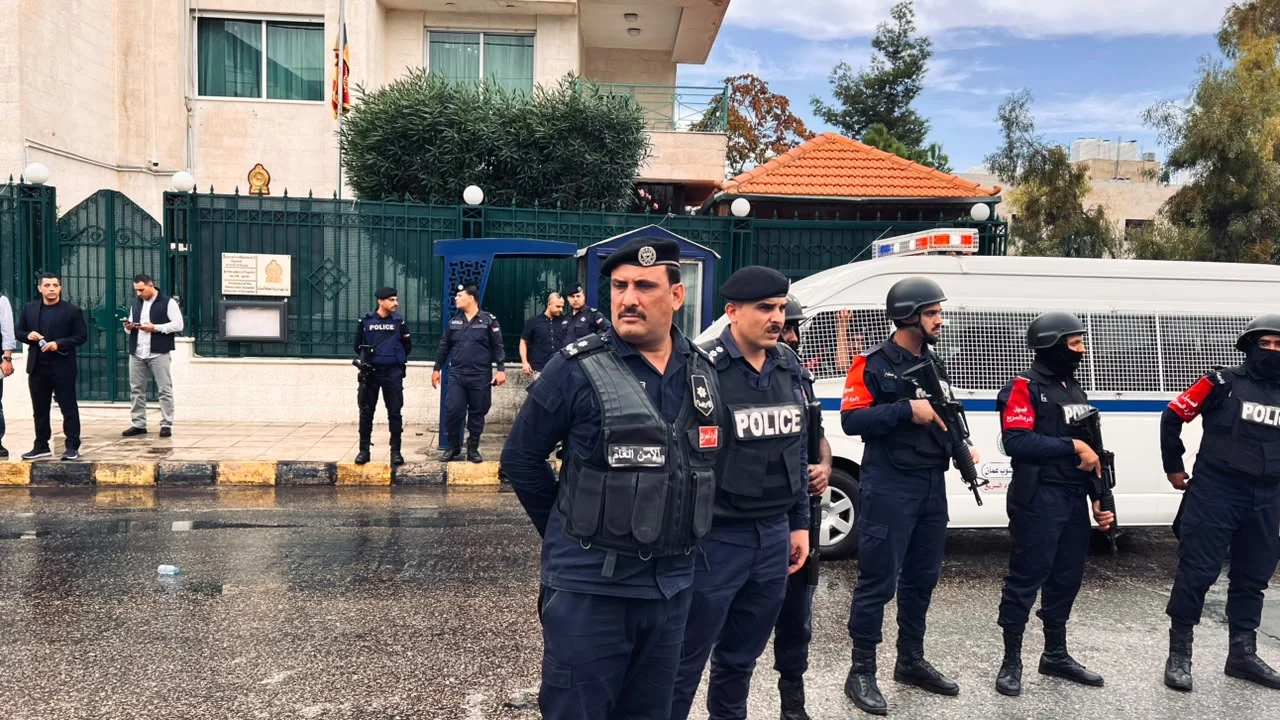
Today, added to this pain is a new assault in Amman that targeted a security officer, bringing back to the forefront the danger of assaults extending to the details of Jordanians’ daily lives, and raising serious questions about the necessity of strengthening preventive measures and security readiness, and closing the loopholes that might allow such assaults to occur, ensuring the protection of citizens and security personnel in their homes, occasions, and streets, before the tragedy occurs, not after it happens.
For the security officer we see in the street is not merely a job holder, but a human being who has a family waiting for him, children looking forward to his return, and a home that does not want to receive the news of his absence. Behind every human being who might be reached by the hand of treachery is a family, dreams, and an entire life. Therefore, protecting security personnel is not the responsibility of an institution alone, but a national and societal duty, as their safety is an integral part of society’s safety and security.
In the face of this blood, a clear popular demand emerges for the necessity of dealing with these crimes in a manner commensurate with their gravity, and reviewing penalties and legislation to achieve deterrence, according to what is determined by specialists and legislative and judicial authorities. We are not men of law, nor do we claim to possess the legal expertise that authorizes us to determine penalties or draft legislation, but we are citizens who see what is happening, feel the pain of families, and fear for the security of our society and children.
Furthermore, the demand for the implementation of death sentences against those who have received final rulings fulfilling their legal conditions expresses a present demand in the Jordanian street, stemming from the belief that the law must take its course, and that there must be a clear message to anyone who considers assaulting people’s lives and security that such crimes will not pass without consequences. For we do not seek revenge, but rather the protection of society and preventing the recurrence of these tragedies.
However, confronting terrorism is not complete through punishment alone; there is another danger that infiltrates minds, beginning with an inciting word and ending with a bullet that kills a human being. It is the takfiri ideology that makes blood permissible, distorts religion, and sows hatred in the souls of youth until killing becomes, in the eyes of its holders, a justified act.
Here emerges the responsibility of everyone in confronting this ideology, from school and university to the mosque, home, and media outlets, through a serious and comprehensive national campaign in which various spectra of society and its institutions participate, where people of knowledge and thought come forward, the voice of sound religion is heard clearly, and the discourses of incitement and takfir are exposed before they find their way into the minds of youth. We need to protect our children from an ideology that steals their humanity before pushing them to shed blood.
We do not need to wait for a new tragedy to talk about extremism, nor to lose another human being to realize that protecting minds is no less important than protecting streets. For homelands are not protected by weapons alone, but also by awareness, and by consolidating the values of mercy, belonging, and respect for life, and by blocking the way for every rhetoric that attempts to turn difference into enmity and the human being into a target.
And this Jordan, the land of the olive tree and the branch, the land of dignity, loyalty, and covenant, was never a homeland defeated by ordeals or undermined by the bullets of treachery. It remained towering like its mountains, united by its people, cherished by its history and sons. A Jordan we sang for: “Jordan, land of resolve, song of swords,” and resolve in it was never merely words spoken, but stances proven by its sons whenever hardships intensify, and whenever the hand of meddling tries to undermine its security and stability. Its sons will remain its best support in confronting anyone who tries to tamper with its security or detract from its stability.
What pains the most in these events is that the Jordanian has come to fear for his simple moments; for a joy he anticipates, a condolence gathering he heads to, and a security officer he sees standing in the street. Therefore, loyalty to this homeland is not through slogans alone, but by preserving the blood of its sons, protecting its men, and confronting every ideology that violates life.
For terrorism has no right to make us grow accustomed to fear, and treachery has no right to wrench reassurance away from Jordanians. Jordanians’ blood is not permissible to shed, and their security is not a matter for complacency. For the Jordan we love deserves that we live in it safely, that its sons return to their homes in peace, and that its joys remain joys, and its sorrows remain sorrows to which a bullet of treachery does not add a new ache.