
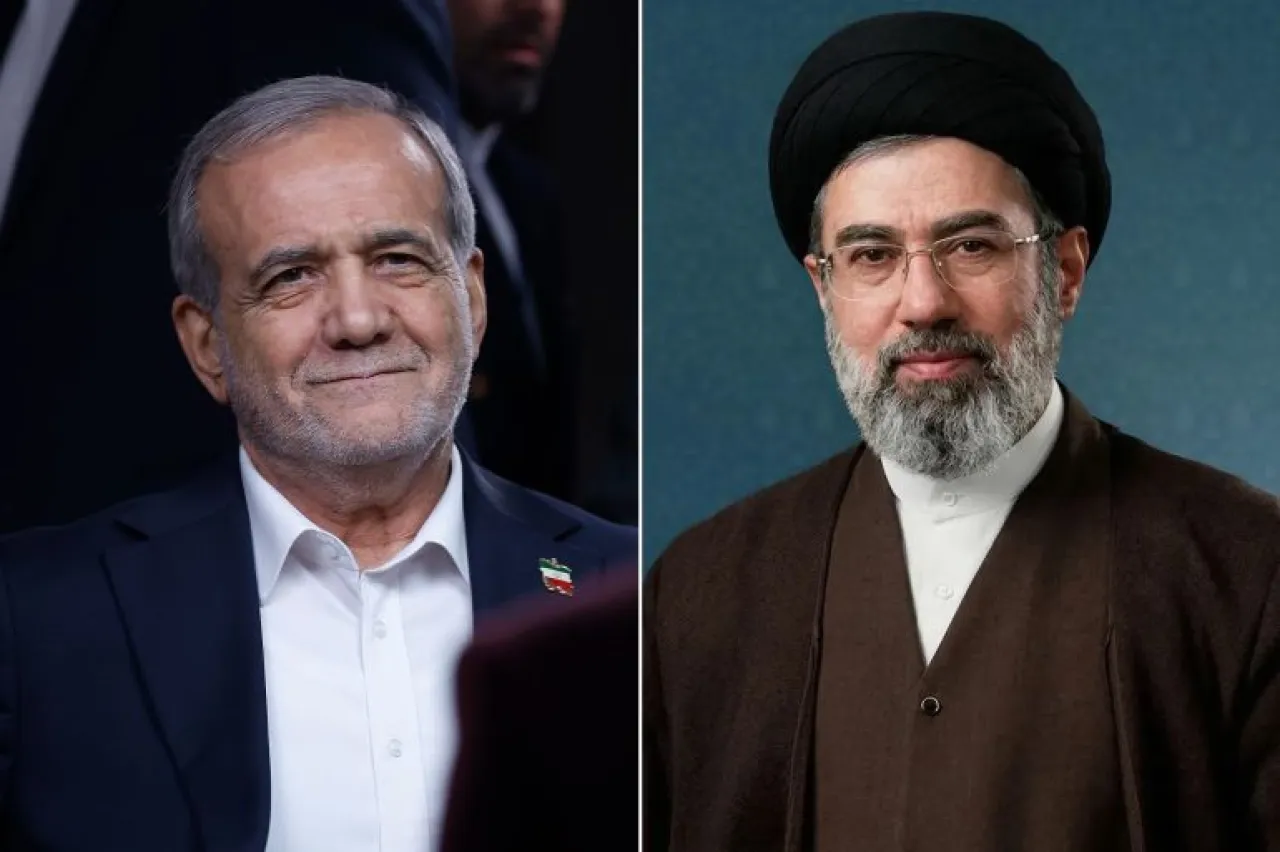
Report: Pezeshkian Unsure Whether Mojtaba Was Actually Present
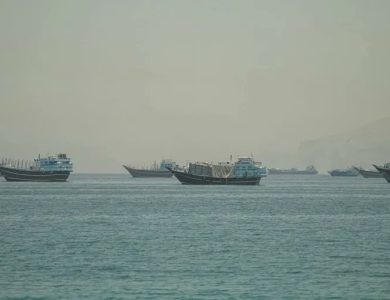
Al-Taj News – A report by The New York Times revealed sharp divisions within Iran’s leadership over how to deal with the United States, noting that the July 7 attacks on three commercial vessels in the Strait of Hormuz were not a decision agreed upon within the leadership, but rather were carried out by a hardline group seeking to derail an agreement with Washington.
The report was based on interviews with eight Iranian officials, three members of the Islamic Revolutionary Guard Corps, and four former officials, in addition to a review of public statements.
According to three Iranian officials, government and security investigations attributed the decision to attack the vessels to Hossein Taeb, who had opposed the agreement from the outset and had been telling Mojtaba Khamenei that ending the war and accepting a settlement would be a mistake.
The newspaper quoted former official Ali Reza Namvar Haghighi as saying that the aim of the attacks was to destroy the memorandum of understanding with US President Donald Trump and block the way to subsequent agreements.
According to five officials and two IRGC members, Iranian President Masoud Pezeshkian received news of the attacks while he was in Iraq, and angrily called IRGC Commander Vahidi, demanding an explanation for what had happened.
Vahidi said, according to the sources, that he had not authorized the operation and had not known about it in advance, and that the Supreme National Security Council had also not been aware of it.
Pezeshkian returned to Tehran, and the following morning, the United States responded with airstrikes.
The explanation given to the Iranian president was that field commanders had acted based on an authorization allowing them to attack vessels that violated Iranian control over the strait without waiting for approval from the central command.
According to the report, Tehran informed Washington and some of its regional allies that the perpetrators of the attacks had acted outside the chain of command, and sent Abbas Araghchi to Oman to contain the escalation.
The “Khatam al-Anbiya” headquarters also did not issue a statement claiming responsibility for the attack, contrary to its usual practice.
The dispute led to confrontations and accusations of treason, as well as threats by two senior generals to resign, according to officials and an IRGC member.
The crisis contributed to a reshuffling of the Supreme National Security Council and the appointment of Mohsen Rezaei to lead it, while Taeb was later appointed head of the Basij.
The report also reveals ambiguity in the channels of communication with Mojtaba Khamenei.
Two officials and a former official said that Pezeshkian’s meeting, which was announced in May, took place via a secure video call, while a dark-windowed ambulance transported him from one location to another. A person appeared on the screen and presented himself as an intermediary between the president and Mojtaba Khamenei.
According to the sources, Pezeshkian told a close ally that he was not certain he had actually communicated with the Supreme Leader.