
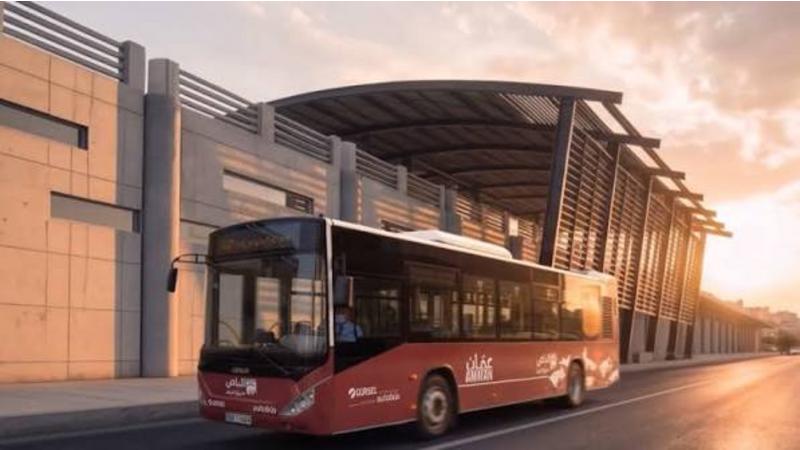
Greater Amman Municipality: New Mahatta Complex Is an Integrated Transport Hub Connecting Amman and Zarqa
Al-Taj News – The Greater Amman Municipality stated that the new Mahatta Complex constitutes an integrated transport hub connecting the bus rapid transit services on the Amman–Zarqa route with the bus rapid transit services within Amman and the Raghadan Station, contributing to improving the efficiency of the public transport system.
The municipality revealed in a video posted about the project on Monday that the complex covers a total area of approximately 45,000 square meters, distributed across three floors. One floor will be allocated to bus rapid transit services between Amman and Zarqa, another to commercial and investment activities, while the third floor will be allocated to bus rapid transit services within Amman.
It explained that the project includes the expansion of King Abdullah I Street and the construction of dedicated lanes for bus rapid transit services, in addition to connecting the complex to Raghadan Station and linking it to Al-Istiqlal Street.
According to the municipality, the complex includes modern facilities equipped with intelligent transportation systems, elevators, and escalators, along with integrated services that take into account accessibility for people with disabilities and the elderly.
The municipality affirmed that the project represents a new step toward upgrading the public transport system and providing more efficient and smooth transportation.
The Greater Amman Municipality, in partnership with the Ministry of Transport, is implementing the new Mahatta Complex project, which is considered one of the major strategic projects, as part of its plan to improve the public transport system, provide more efficient and smooth transport services, and enhance the city’s aesthetic appearance, at a cost of 33 million dinars.
It explained that the project will take two years to complete, as the station’s location is in an area experiencing active public transport movement, as well as heavy pedestrian and vehicular traffic. The site also has underground infrastructure and utilities, including water and electricity networks, which require relocation, in addition to existing buildings that will be removed.
The municipality affirmed that international safety codes were adopted during the design phase and that international specifications and codes would be followed during the implementation phase, in addition to providing specialized safety teams working to protect project workers and citizens in its vicinity.
It noted that it had held numerous regular meetings and coordination and consultation sessions with traders inside the station through a committee representing them, with the aim of listening to their observations, identifying their needs, and ensuring that any challenges are addressed in a manner that guarantees the continuity of their commercial activities without harm, while reaching agreement on appropriate solutions and alternatives that safeguard their rights and serve the public interest, and ensure the continuity of commercial and economic activity.
The municipality explained that it had secured alternative locations for traders near the original site in the same area, in order to ensure the continuity of commercial activity and the same commercial activities they conduct.
The project is the largest undertaken by the Greater Amman Municipality, with substantial updates made to the station’s design based on feedback from stations previously implemented, which necessitated a fundamental modification of the design.