

Jordan Seismological Observatory: 63 Local Earthquakes Recorded Since the Beginning of 2026
Al-Taj News –
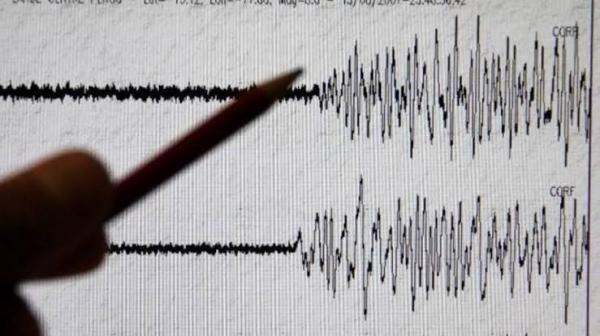
The Jordan Seismological Observatory confirmed that seismic activity in Jordan and around the world remains stable and steady, with the observatory recording 324 local and distant earthquakes since the beginning of 2026 through August 16.
Observatory Director Ghassan Sweidan said seismic activity in Jordan is currently stable, ranging from weak to moderate. He noted that 63 local earthquakes were recorded from the beginning of 2026 through August 16, compared with 71 earthquakes during the same period in 2025, representing a decrease of approximately 11.3%.
He explained that seismic activity along the Dead Sea Transform and the Dead Sea Fault ranges from weak to moderate, stressing that there has been no significant or abnormal change in seismic activity along the transform.
Sweidan noted that recent reports of increased global seismic activity are mainly attributed to advances in earthquake monitoring and recording technologies, which now allow small and imperceptible earthquakes to be detected and documented.
Regarding the earthquakes recently recorded in Venezuela, Colombia, and Indonesia, Sweidan said they were tectonic events resulting from natural movements in areas of high seismic activity, where the nature of tectonic movement causes large amounts of seismic energy to accumulate and be released violently and destructively when an earthquake occurs.
He explained that the occurrence of earthquakes simultaneously in different areas is a natural phenomenon linked to tectonic movements and the proximity and interconnectedness of seismic activity belts. He noted that each seismic zone has its own characteristics in terms of geological structures, seismic history, and the type of tectonic movement.
He stressed that assessments of these earthquakes highlight the need for all relevant authorities to be fully prepared to mitigate the effects of similar earthquakes.
Sweidan confirmed that strong and destructive earthquakes can trigger earthquakes in other areas, explaining that seismic belts around the world are highly interconnected. He added that the arrival of seismic waves generated by destructive earthquakes at active faults and fractures may activate them and trigger earthquakes, citing the earthquakes in Türkiye in 2023 as an example.
Sweidan said that the seismic monitoring maps and records available at the Jordan Seismological Observatory show that the annual earthquake rate remains stable and within normal ranges in terms of both number and magnitude locally, regionally, and globally.
Since the beginning of the current year, the Jordan Seismological Observatory has recorded 261 distant earthquakes, concentrated in the Indian, Pacific, and Atlantic oceans, as well as Indonesia, the Philippines, Colombia, the Kamchatka Peninsula, the Kuril Islands, Japan, and China.
Sweidan noted that the observatory recorded the strongest earthquake since the beginning of 2026 in the Philippines, measuring 7.8 on the Richter scale on June 7. Meanwhile, the strongest earthquake recorded during the same period in 2025 occurred in Russia’s Kamchatka Peninsula, measuring 8.7 on the Richter scale on July 29, 2025.
Al-Mamlaka