
10m euro project launched to reduce sedimentation in King Talal Dam
AMMAN — The Jordan Valley Authority (JVA), in partnership with the International Union for Conservation of Nature (IUCN) and the Netherlands, on Monday launched a four-year project to reduce sedimentation in the King Talal Dam basin and enhance water security.
The project, funded by the Dutch government for 10 million euros, was launched in the presence of Dutch Ambassador to Jordan Stella Kloth, IUCN Regional Director for West Asia Hani Al Shaer, heads of committees of concerned municipalities, officials, representatives of national and international organisations and local communities.
JVA Secretary General Hisham Haisa said that the project represents an important step towards protecting water resources and improving the efficiency and sustainability of water storage facilities, according to a JVA statement.
He said efforts to address sedimentation will begin at its sources in the upper basin by reducing soil erosion and limiting the flow of sediments into the dam.
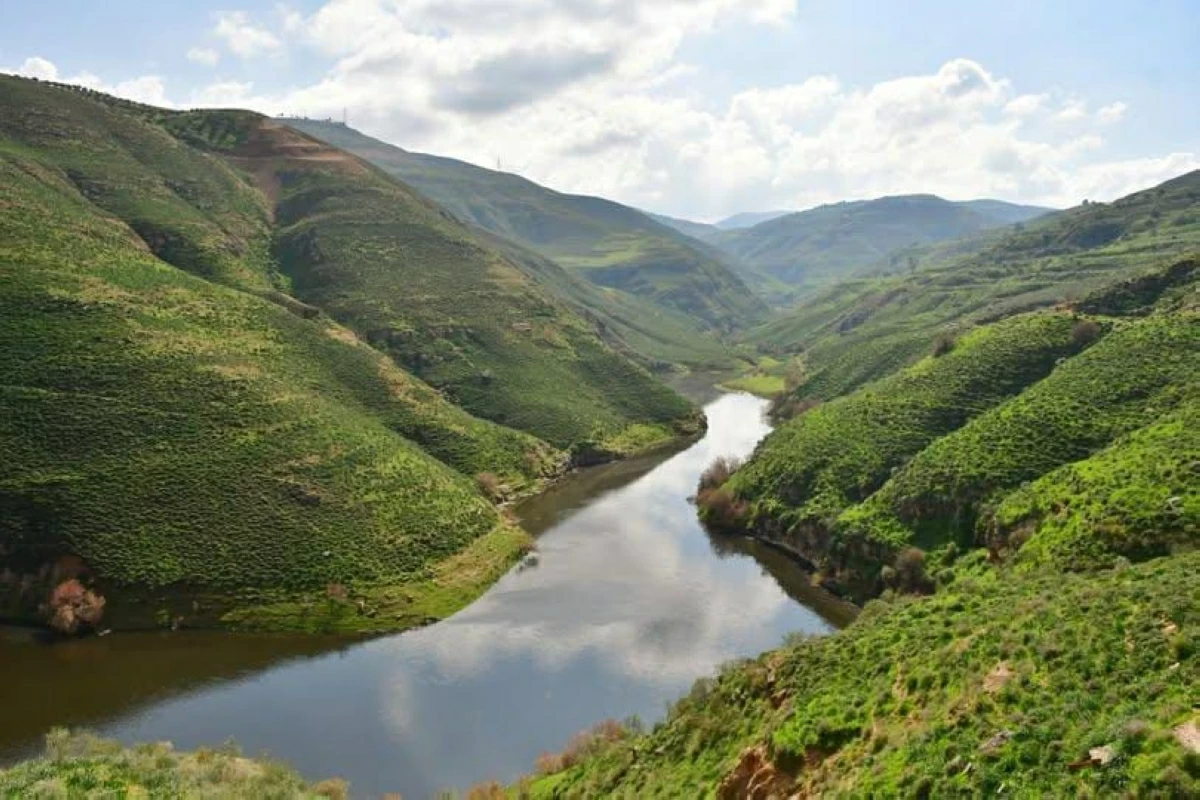
Haisa noted that King Talal Dam is one of the Kingdom’s key surface water storage facilities and plays an important role in providing irrigation water to farmers in the Jordan Valley.
He stressed that the JVA attaches great importance to protecting dams and preserving their storage capacity as part of national water security efforts.
The project adopts an integrated approach combining engineering and nature-based solutions, alongside strengthening the technical and institutional capacities of relevant stakeholders, he said.
The project aims to reduce soil erosion, restore vegetation cover and address the causes of sediment accumulation at their source, with the goal of reducing the flow of sediment into King Talal Dam by at least 10 per cent by the end of the fourth year.
Haisa stressed that achieving the project’s objectives requires effective cooperation among national and local institutions, local communities, farmers and international partners.
For her part, Kloth underscored the importance of Jordanian-Dutch cooperation in supporting the water sector and addressing challenges related to water scarcity and climate change.
She said the project reflects the ongoing cooperation between the two countries to enhance the sustainability of water resources and protect water infrastructure, expressing hope that it would deliver tangible and sustainable results.
Shaer said that addressing sedimentation requires an integrated approach that begins at the basin and the sources of sediment.
He stressed the importance of combining engineering and nature-based solutions to protect King Talal Dam and enhance its sustainability, reaffirming the IUCN’s commitment to working with the JVA and other partners to achieve the project’s objectives and develop models that can be applied in other basins.
The project is aligned with the National Water Strategy 2023–2040 and national water and climate change policies, and contributes to the Sustainable Development Goals, particularly those related to water, climate action and ecosystem protection.
The launch event included a presentation on the project’s objectives, phases and implementation mechanisms, as well as a discussion session with relevant stakeholders.
The project is expected to provide a model that can be expanded to other dam basins, contributing to the protection of water infrastructure, preservation of storage capacity and enhancement of Jordan’s water security.
jordantimes