
US, Canada hold last-minute talks to stop 50% U.S. tariffs on $20 billion worth of Canadian goods
WASHINGTON (AP) — The United States and Canada have wrangled for decades over trade, poking each other interminably over sore spots like Canadian softwood lumber imports and U.S. access to Canada’s protected dairy market.
Somehow the two neighbors still managed to remain friends, allies — and trading partners. Canadian soldiers fought alongside Americans in Afghanistan after 9/11. The 5,525-mile U.S.-Canada border is undefended, and nearly 330,000 people and $2 billion dollars’ worth of goods cross it every day; 800,000 Canadians live in the United States.
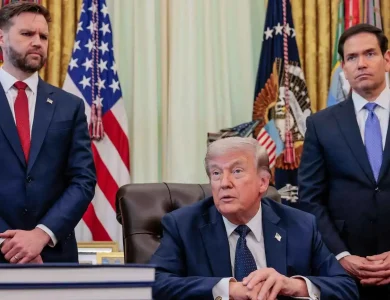
President Donald Trump’s belligerent approach to dealing with Canada marks an extraordinary departure from the traditionally cooperative relationship between the two countries. Trump has hit Canadian goods with tariffs — in a push to bring manufacturing back to the United States — and has repeatedly made inflammatory comments about turning Canada into America’s 51st state.
The Canadian public is fed up. A petition to expel the U.S. ambassador, a Trump ally, has collected nearly 218,000 signatures since July 21. It accuses Ambassador Pete Hoekstra of having “normalized’’ Trump’s talk of annexing Canada, among other things.
Tension could hit new heights at 12:01 a.m. Wednesday if Trump goes ahead with his plan to impose 50% tariffs on $20 billion worth of Canadian products, ranging from hockey sticks to tongue depressors.