
Al-Mahatta Complex: JD 33 Million Project to Restructure Public Transport in Amman
Altaj News –
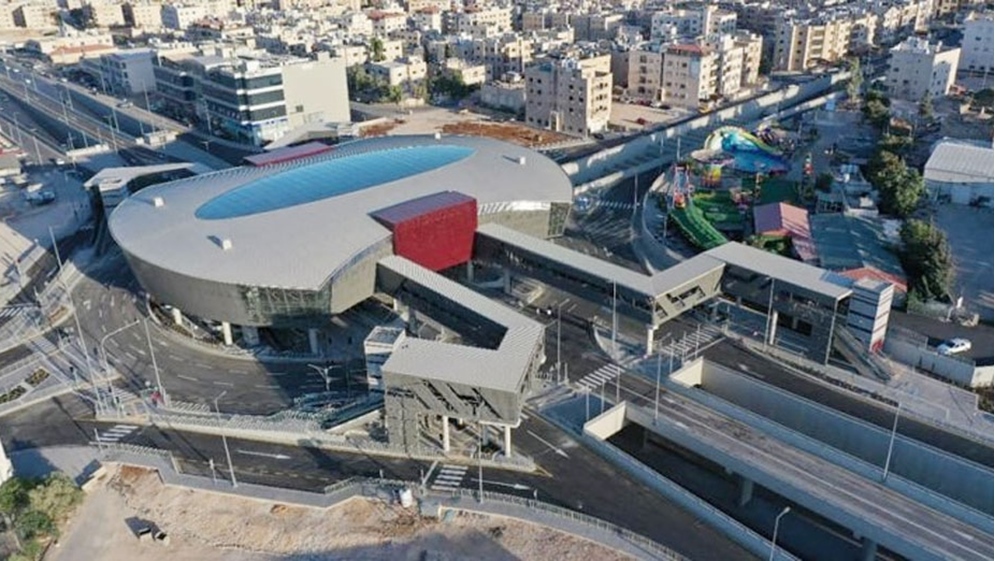
The Al-Mahatta Complex project is set to become a central hub connecting public transport networks in the capital by bringing together Amman’s Bus Rapid Transit (BRT) services, the Amman-Zarqa BRT route, and linking them to the Raghadan Bus Station. The project has a total cost of JD 33 million.
Transport sector specialists believe the project’s significance goes beyond establishing a new bus complex, as it will create an interchange station allowing passengers to transfer between different transport routes and provide a foundation for future expansion of the public transport network, in addition to commercial, investment, and passenger service facilities.
Mohammad Al-Dweiri, spokesperson for the Ministry of Transport, told Al-Ghad that the ministry is proceeding with the project in partnership with the Greater Amman Municipality at a total cost of JD 33 million, including JD 26 million financed through the Ministry of Transport’s budget and JD 7 million by the Greater Amman Municipality.
He explained that the project is part of the ministry’s efforts to develop the public transport system and enhance integration between its services. The Al-Mahatta Complex will serve as an integrated hub for Amman’s BRT services and the Amman-Zarqa BRT route, while connecting them to Raghadan Bus Station.
Al-Dweiri said the project’s construction tender was awarded by the Greater Amman Municipality to a local contractor through joint financing from the ministry and the municipality, with the implementation period set at 730 days from the date work begins.
According to Al-Dweiri, the project includes the construction of the Al-Mahatta Complex building, covering approximately 45,000 square meters, along with around 600 meters of BRT lanes, the expansion of King Abdullah I Street, the construction of a service road connecting it to Army Street, as well as infrastructure and related service works.
The complex building will consist of three main floors. One will be dedicated to BRT buses operating on the Amman-Zarqa route, while another will be allocated to Amman’s BRT buses, strengthening the complex’s role as an interchange point between different transport networks.
Al-Dweiri stressed that the project is one of the important projects for developing the public transport system and will contribute to greater integration between Amman’s BRT services and the Amman-Zarqa route, improving operational efficiency, service quality, and passenger mobility.
Former Transport Minister Wessam Al-Tahtamouni said the project has strategic importance because of its ability to connect different routes, describing the Al-Mahatta Complex as a transport hub that will provide a better service and experience for public transport users.
Al-Tahtamouni told Al-Ghad that the project’s designs took engineering requirements into account in cooperation with partners and with a high degree of safety. She noted that the complex will serve as a key hub for transportation in Amman, bringing together different routes and serving as a passenger distribution point.
According to Al-Tahtamouni, the importance of the complex will increase with any future extensions to the BRT routes, as the project will provide a foundation for developing and connecting the network and strengthening its role as a central transport station in the capital.
The project is not limited to transportation operations, according to Al-Tahtamouni, as it also includes investment and service opportunities through commercial shops, restaurants, and entertainment facilities, making the complex a space offering integrated services to passengers alongside its primary transportation function.
Transport and traffic engineering specialist Khaled Haddadin said the project’s importance lies in its role as an interchange station within the public transport network, connecting more than one route and area, whether routes operating within the capital or those connecting Amman with areas outside it, particularly the city of Zarqa.
Haddadin said that establishing a station capable of connecting different transport routes would strengthen its role within the public transport system, while highlighting the investment opportunities that could be provided through the project’s facilities, shops, and accompanying services.
He stressed the need for the complex’s design to take the future development of the transport network into consideration, particularly with any completion or expansion of the BRT project, so that the station can accommodate future developments and maintain its role as an integrated hub between different transport systems and routes.
The importance of this aspect lies in the fact that the complex will not merely serve as a departure and arrival point for buses, but will also provide a link between multiple transport services. Its ability to accommodate future expansions will therefore be a key factor in ensuring the project’s long-term effectiveness.
According to experts, the project provides the public transport system with an opportunity to establish a hub connecting several major mass-transit services in the capital and surrounding areas. Its effectiveness, however, will depend on its ability after opening to achieve actual integration between routes, facilitate passenger transfers, and accommodate future expansions of the public transport network.