
Why Tesla has been caught up in a massive car recall in China
Hidden car door handles – the sleek designs often found on electric vehicles (EVs) – have come under the spotlight over the past week.
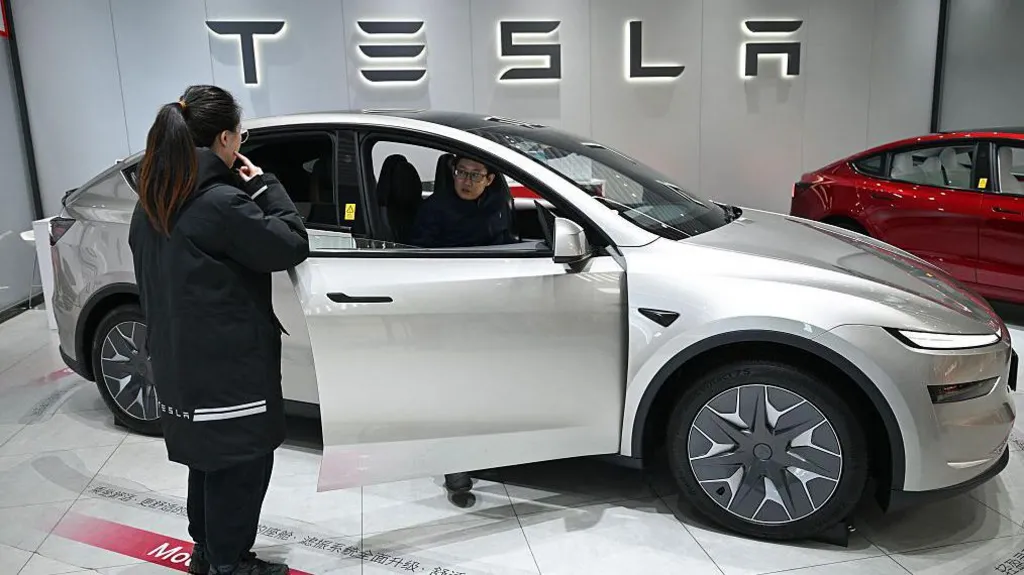
That’s after China announced its biggest ever recall of cars, with more than four million vehicles – mostly Teslas – affected.
The recall comes ahead of new regulations in China, requiring cars to have a mechanical release both on the inside and outside of their doors.
Popularised by Elon Musk’s electric vehicle giant, this type of handle has become commonplace around the world.
But several incidents have raised concerns that this designmay make doors difficult to open in an emergency.
‘A real safety concern’
Hidden door handles are widely used in modern cars in China, with around 60% of the top 100 best-selling new energy vehicles, including EVs and hybrids, having them.
The minimalist design gives vehicles a “sleek look and reduces wind drag” but can be confusing to use, car industry analyst Stephen Dyer from consultancy AlixPartners told the BBC.
“Even I often find it difficult to locate the switch to open the door from the inside of an unfamiliar vehicle,” said Dyer, who is based in Shanghai.
But beyond their usability, the handles have been blamed for endangering the lives of drivers and passengers.
Electronically powered door handles became an industry trend, but raised “real safety concerns” when doors failed to open promptly, delaying rescue efforts after accidents, said Nanyang Technological University associate professor Lyu Chen.
“A door handle may seem simple, but it becomes safety-critical in the seconds after a crash,” Chen said.
Chinese carmaker Xiaomi faced intense scrutiny following two fatal crashes in 2025 involving its SU7 model, when suspected electrical failures allegedly trapped occupants.
One of the incidents took place on a highway in Tongling city, eastern China, killing three people, according to regional news coverage cited by state-controlled media Global Times.
Relatives of the victims said the passengers were stuck in the car as the vehicle’s doors could not be unlocked after the collision, the outlet said.
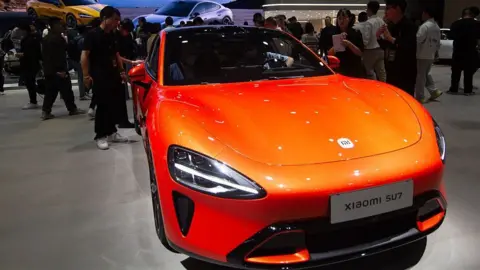
At the time, Xiaomi’s representatives said the SU7 had mechanical emergency release handles that function even without power, which are located at the bottom of each door.
The company added at the time that it was investigating the matter and cooperating with the police.
The latest models of the SU7 come with new door handles that can be opened without power.
Xiaomi has not responded to BBC requests for comment.
Tesla has alsofaced lawsuits in the US over its door handle designs.
The company has been sued by the only survivor of a crash in 2024 involving a Cybertruck – Tesla’s electric pickup – that killed three college students in California.
Survivor Jordan Miller alleged that the Cybertruck’s design trapped passengers in the burning vehicle and blocked their rescue.
The car did not have door handles and the electronic buttons meant to open the doors failed to work, according to his lawyers from The Veen Firm.
“When you design a vehicle with no mechanical way to open the doors from the outside, you are betting the electronics will work in every scenario, including a high-speed crash followed by a fire,” said one of the lawyers in a statement.
In court filings, Tesla denied any wrongdoing and said the Cybertruck is compliant with US federal safety standards, the Guardian reported.
There have been other cases in the US of passengers, including children, allegedly being trapped in Tesla cars after the doors suddenly stopped working.
The BBC has contacted Tesla for comment.
What is being done about hidden handles?
In February, China said it would ban hidden door handles, making it the first country to do so.
The new rules, which take effect on 1 January 2027, mean new car designs without physical release mechanisms on the inside and outside of their doors cannot be sold.
The cars’ interior must also carry signs to show how to open the door.
The measures in China come ahead of the US and European Union, which typically lead regulations around road safety and emissions, Dyer noted.
One reason is likely to be the sheer number of EVs in China, he added.
On 21 August, China’s State Administration for Market Regulation (SAMR) announced that Tesla and some major Chinese car makers – including Xiaomi, XPeng and Geely – would recall more than four million vehicles.