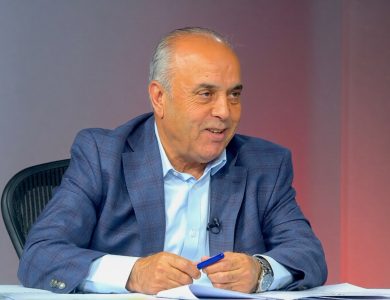


Former Education Minister to Al-Taj: Valuing Teachers Begins with a Fair Salary and Genuine Professional Incentives
Al-Taj News – Ghada Al-Khouli
Former Minister of Education Dr. Fayez Al-Saudi affirmed that achieving genuine and sustainable reform in the education system begins with the teacher, as the fundamental pillar of the educational process, the maker of people, the builder of character, and the guide of students’ abilities.
Al-Saudi said in an interview with “Al-Taj News” today, Monday, that the teacher should not be viewed as an employee who performs working hours and leaves, but rather as an essential partner in shaping the future of society, stressing that valuing teachers should not be limited to an annual occasion or words of thanks, but should become a sustainable national policy.
He pointed out that valuing teachers begins with providing a fair salary and genuine professional incentives commensurate with the importance of their mission and the scale of the responsibilities they bear, stressing at the same time that improving income alone is not enough, as the teacher needs a work environment that preserves their dignity, gives them confidence, and opens the doors to professional growth and advancement.
Al-Saudi called for establishing a clear system of incentives that links professional advancement to achievement, development, and competence, so that a teacher who develops themselves, effectively employs technology, seeks modern teaching methods, takes into account individual differences among students, and achieves a real impact on their learning receives tangible material and moral recognition.
He stressed the need for continuous professional development to become an integral part of the teaching profession, rather than merely formal training courses, noting that teachers today are required to keep pace with artificial intelligence, educational technology, modern teaching methods, and the findings of educational research, and to gradually move from transmitting knowledge to designing learning experiences that make the student the focus of the educational process.
He affirmed the importance of providing teachers with genuine opportunities to participate in conferences and specialized training programs, conduct educational research, exchange expertise, and benefit from successful experiences locally and globally, in addition to providing the time and resources necessary for this.
In contrast, Al-Saudi explained that caring about teachers does not mean exempting them from professional responsibility, noting that a teacher who receives society’s appreciation and the state’s support should respond with commitment, continuous learning, and a commitment to improving their performance, given that the proper relationship is based on rights and duties, appreciation and responsibility.
He considered that improving the material and moral status of teachers would make the teaching profession more attractive and encourage those with abilities and competencies to join it and remain in it, affirming that attracting the best quality of teachers, alongside providing them with training, confidence, and incentives, automatically reflects on the quality of learning and the ability to discover students’ talents and abilities and take their individual differences into account.
Al-Saudi said that investing in the teacher is, in reality, an investment in the student, the school, society, and the nation’s future, asking: “How much does it cost us for the teacher to remain away from development while the world around them changes every day?”
He affirmed the need for a teacher-leader who is proud of their profession, confident about their future, and capable of continuous learning, keeping pace with research and technology, and transforming knowledge into real learning.
Al-Saudi noted that changing education begins by giving the teacher the status befitting their mission and the opportunity that enables them to perform this mission to the best of their ability.