
$2.5 Billion for the Railway Project .. Will Ma’an Become Jordan’s Logistics Gateway?
Wafa Subaih.
From Aqaba to Ma’an .. A Railway Opening New Horizons for the Jordanian Economy
Aql to “Al-Taj”: Aqaba – Ma’an Railway .. A Strategic Project That Redraws the Transport Map in Jordan
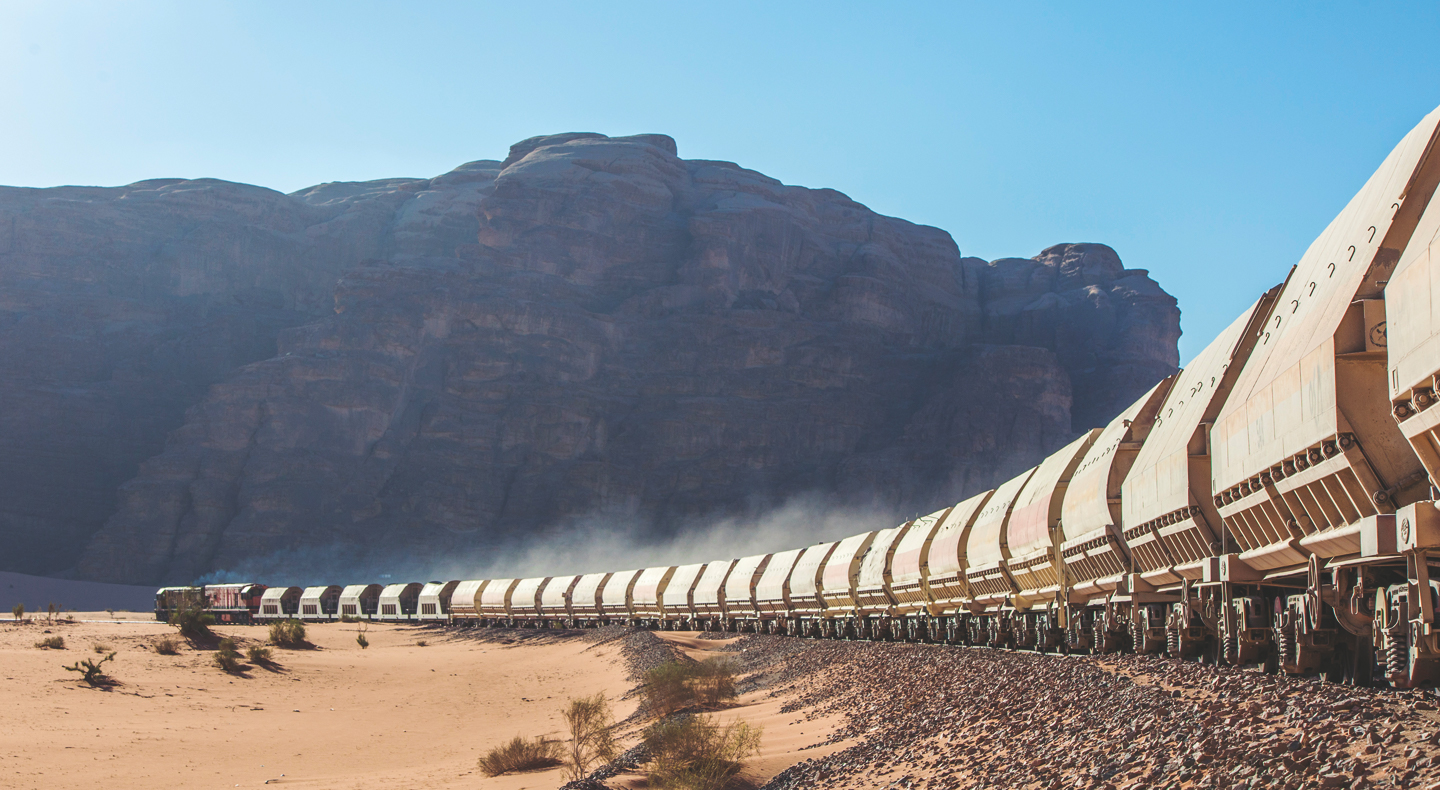
The Aqaba – Sheidiya – Ma’an railway project represents one of the strategic projects for developing the transport and mining sector in Jordan, given the opportunities it provides to reduce the costs of transporting phosphate and potash, enhance export competitiveness, and open new investment horizons in the southern governorates, in addition to the possibility of developing an economic and logistics corridor serving the industry and trade sectors.
According to the announced plan, the project extends for approximately 403 kilometers, including the phosphate and potash routes, with a length of 360 kilometers, in addition to the Sheidiya – Ma’an link, with a length of 43 kilometers, to connect the industrial port of Aqaba with the phosphate mines in Sheidiya and the potash production areas in Ghor Al-Safi, as well as connecting the project to the Ma’an dry port so that it becomes a center for collecting, storing, handling, and redistributing goods.
The announced investment value of the project amounts to approximately $2.5 billion, while the main implementation is expected to begin during 2027, with the works taking approximately five years, according to the announced statements.
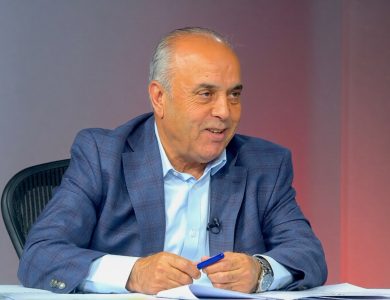
To shed light on this project, energy expert Hashem Aql confirmed that the economic value of the project is not limited only to reducing the costs of transporting phosphate and potash, but extends to the possibility of developing an integrated transport network serving the mining, industry, and trade sectors, contributing to enhancing the competitiveness of Jordanian exports and attracting investments. He noted that the project could constitute the nucleus of a national economic and logistics corridor that supports long-term economic growth.
Aql explained during his interview with “Al-Taj News” that the project’s economic feasibility depends on transporting large and steady quantities of goods, clarifying that the first phase targets transporting approximately 16 million tons annually, distributed as 13 million tons of phosphate and three million tons of potash.
He pointed out that securing these quantities represents a key factor in achieving the project’s financial feasibility, noting that the announced studies and statements link reaching a cargo volume of approximately 16 million tons annually to achieving a return of no less than 7%.
He added that concluding long-term agreements with mining companies and industrial entities would contribute to ensuring the flow of goods and the stability of operations, thereby enhancing the project’s chances of success and economic sustainability.
Aql confirmed that the announced direct return of the project consists of reducing the cost of transporting phosphate and potash by approximately $40 million annually, noting that the potential economic gains exceed this figure to include reducing fuel consumption, lowering truck transportation and road maintenance costs, reducing traffic congestion, and improving the efficiency of transporting exports to the Port of Aqaba.
He explained that these factors could positively affect the competitiveness of Jordanian products in global markets by reducing logistics costs and accelerating the arrival of shipments at ports.
Ma’an as a Logistics and Industrial Center
The Ma’an dry port represents one of the most important strategic aspects of the project; therefore, it is necessary to develop it into an integrated logistics center, rather than merely a station for receiving goods.
This direction opens the way for establishing warehouses, container yards, distribution and storage centers, in addition to providing customs services and handling, packing, packaging, and maintenance facilities, thereby enhancing the governorate’s ability to attract industrial and commercial investments.
The development of these facilities could also contribute to transforming Ma’an from a transit area into an economic and logistics center that attracts industrial and commercial activities, provides direct and indirect job opportunities, and stimulates the economy of the southern governorates, according to Aql.
Official estimates speak of the possibility of providing approximately five thousand direct and indirect job opportunities associated with the project. He confirmed that expanding the accompanying industrial and logistics activities would enhance the project’s economic and investment impact.
Expanding Railway Uses Enhances Economic Returns
Perhaps one of the project’s most important strategic opportunities lies in not restricting its uses to transporting phosphate and potash, but rather developing it as part of a multi-purpose national infrastructure capable of serving various productive and industrial sectors.
The range of transported goods can be expanded to include products of industries related to phosphate, such as fertilizers and phosphoric acid, in addition to chemical and industrial products associated with potash and bromine, as well as cement, stone, marble, silica, kaolin, and other minerals and raw materials.
In this regard, Aql explained that transporting industrial and finished products, alongside raw materials, enhances the added value of Jordanian exports. He noted that having a means of transport capable of handling large quantities efficiently could encourage investors to establish factories and processing facilities near production sites and railway lines.
He added that this integration would create an industrial and logistics hub connecting Sheidiya and Ma’an with Aqaba, bringing together mining sites, processing factories, storage and transport facilities, and ports, reaching global markets.
He noted that container transport represents an important area for future expansion, explaining that the connection between the Port of Aqaba and the Ma’an dry port could support storage, redistribution, and the transportation of goods to local and regional markets. He pointed out that the company had announced a future commitment to transporting approximately 300,000 containers between the two ports.
Integration Between Trains and Trucks Is an Economic Necessity
Within the framework of discussing this huge project, it is worth noting that developing railways does not mean dispensing with trucks, but rather requires building an integrated system in which roles are distributed among different modes of transport.
Trains can handle the transportation of large quantities over long distances, while trucks continue to distribute goods locally and transport them to their final destinations, thereby achieving integration between rail and road transport, according to Aql.
He explained that this model could contribute to easing pressure on roads and improving the efficiency of goods transportation, while maintaining the role of the road transport sector in providing services that require flexibility and direct access to facilities and markets.
He added that the regular arrival of shipments at the Port of Aqaba could support the efficiency of handling operations and berth turnover, and reduce ships’ waiting times, which would positively affect the export chain and the logistics services associated with it.
National and Regional Connectivity Multiplies Opportunities
Regarding the strategic value of the project, Aql pointed out that it would increase with the possibility of connecting it in the future to other industrial and commercial centers in the Kingdom, including Amman, Zarqa, and Mafraq, in addition to opportunities for regional connectivity with Saudi Arabia, Iraq, and Syria, reaching Turkey and Europe, according to the necessary plans, agreements, and infrastructure.
He confirmed that expanding the railway network could enhance Jordan’s position in regional trade flows through integration between ports, railways, dry ports, industrial zones, and storage and distribution centers.
He added that this direction would enable the Kingdom to provide integrated logistics services, rather than limiting itself to port services and traditional transport. He noted the importance of coordination between infrastructure projects and industrial and investment plans to ensure the attraction of companies and investors.
$40 Million Annually .. Will the Railway Open New Horizons for Ma’an?
From here, it can be said that the success of the Aqaba – Sheidiya – Ma’an railway project is linked to several key factors, foremost among them securing the targeted cargo volumes, developing the Ma’an dry port simultaneously with the railway’s implementation, preparing the infrastructure to receive additional goods, and working to connect the project in the future to a broader national and regional transport network.
The estimated direct return of approximately $40 million annually from reducing the costs of transporting phosphate and potash represents one aspect of the economic feasibility, while the broader gains will depend on Jordan’s ability to attract industries and investments and expand the movement of containers and goods across the network.
However, the real economic bet lies in transforming the first 403 kilometers into the nucleus of a network capable of serving multiple sectors and increasing the volumes of goods transported in the future, thereby enhancing the interconnectedness of mining, industry, transport, and trade.
The railway could transform from a project for transporting phosphate and potash into a driver of economic growth, investment, and job opportunities. Its integration with ports and industrial and logistics zones will also enhance Jordan’s opportunities in supply chains and regional trade.