
Qbeilat to “Al-Taj”: The Queen Rania Award Turned the Stories of Outstanding Teachers into Role Models
Al-Taj News –
Ghada Al-Khouli
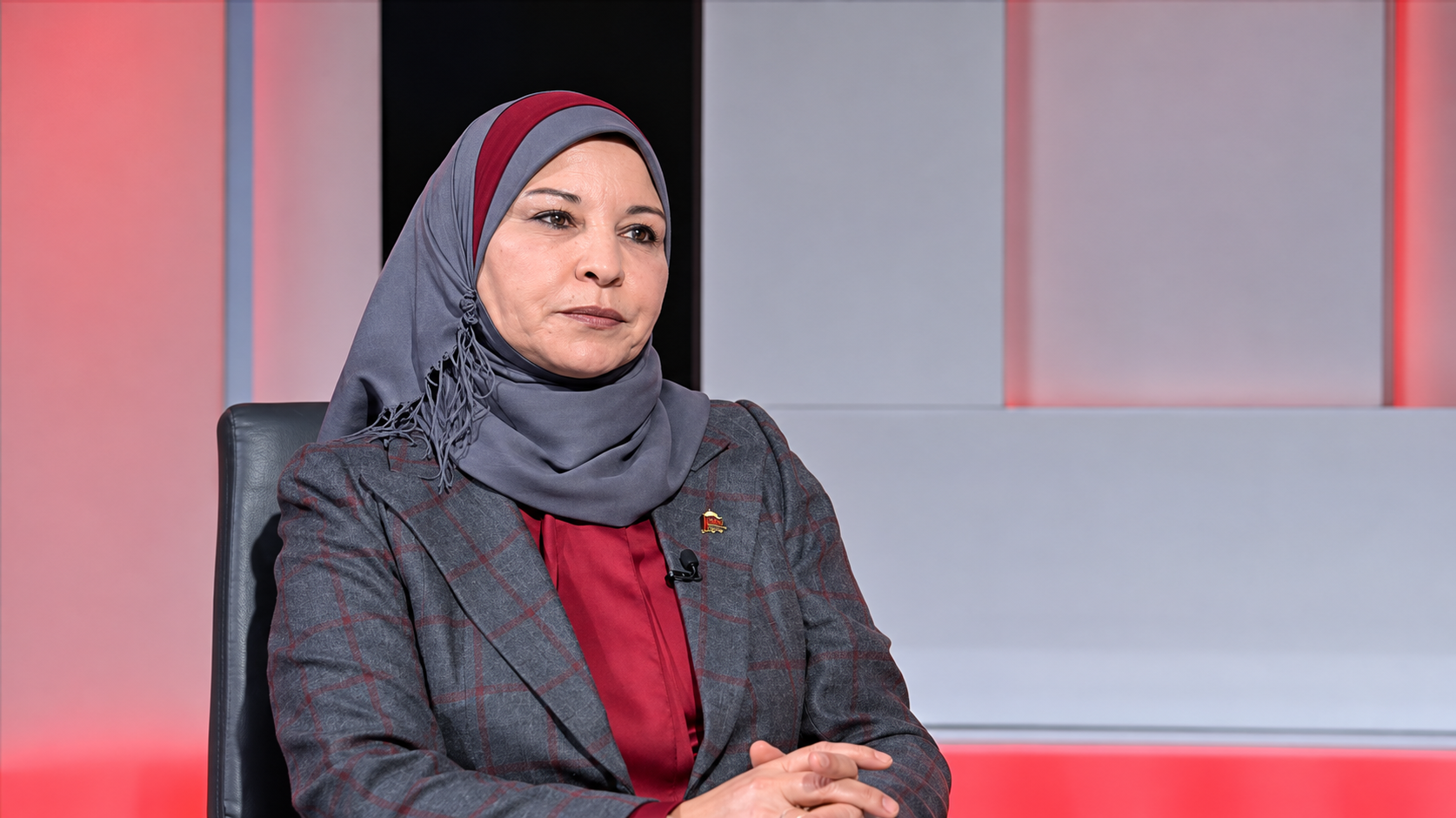
Former Secretary-General of the Ministry of Education for Administrative Affairs, Dr. Najwa Qbeilat, affirmed that the teacher is the cornerstone of building and advancing societies, as they carry a noble mission of shaping generations and forming their minds and consciences, with a pivotal role in instilling values and morals and fostering a spirit of belonging and loyalty to the homeland.
Qbeilat said in an interview with “Al-Taj News” today, Monday, which coincides with Teachers’ Day, that the teacher’s role is not limited to transmitting knowledge, but extends to building the individual’s character so that they become a good citizen, committed to their values and principles, embodying good morals, and capable of making a positive contribution to their community.
She noted that throughout history, teachers have held a distinguished status in various societies, and were regarded as role models, educators, and guides for generations. She explained that the respect they received did not stem solely from their profession, but from their noble humanitarian mission and their role in preparing future leaders and agents of change.
Qbeilat pointed out that recent years have witnessed some irresponsible individual practices that undermine the sanctity of the teaching profession and the positive image of the teacher, which has contributed to weakening their standing among certain segments of society. She said this requires a serious pause to address this phenomenon and restore the exemplary image of the teacher as a role model.
She affirmed that the responsibility for enhancing the status of teachers begins with the family, as the primary institution of upbringing, by instilling respect for teachers and appreciation for their efforts in children from an early age, alongside the role of community institutions in establishing this culture through community initiatives and awareness programs.
She also stressed the importance of the role of places of worship in promoting values that call for respecting and honoring people of knowledge, in addition to the responsibility of the media to highlight outstanding teachers, showcase their achievements and success stories, rather than focusing on isolated negative cases that do not represent the reality or mission of the profession.
She called for a review of policies and procedures related to recruiting workers in the teaching profession, and for selecting teachers according to precise scientific, ethical, and professional standards that ensure qualified, committed individuals who embrace the mission enter this field. She stressed that the teacher is not merely an employee carrying out daily duties, but rather someone entrusted with an educational mission that requires belief in its importance and a commitment to its responsibilities.
Qbeilat highlighted the importance of supporting continuous professional development for teachers, improving the educational work environment, honoring outstanding teachers, involving them in educational decision-making, strengthening the partnership between schools and families, and highlighting positive role models in the media, considering these measures as contributing to restoring the status of teachers and strengthening their image in society.
In this context, Qbeilat considered the Queen Rania Al Abdullah Award for Distinguished Teacher to be a pioneering model in recognizing teachers and motivating them toward creativity and excellence. She noted that the award has contributed to highlighting inspiring educational success stories, strengthening a culture of professional excellence, and presenting exemplary teachers who have carried the mission of education with dedication and competence.
She affirmed that restoring the status of teachers in society is not the responsibility of a single entity, but rather a shared national