
$2.3 Billion .. Removal of Old Railway Tracks in Aqaba Ahead of the New Project
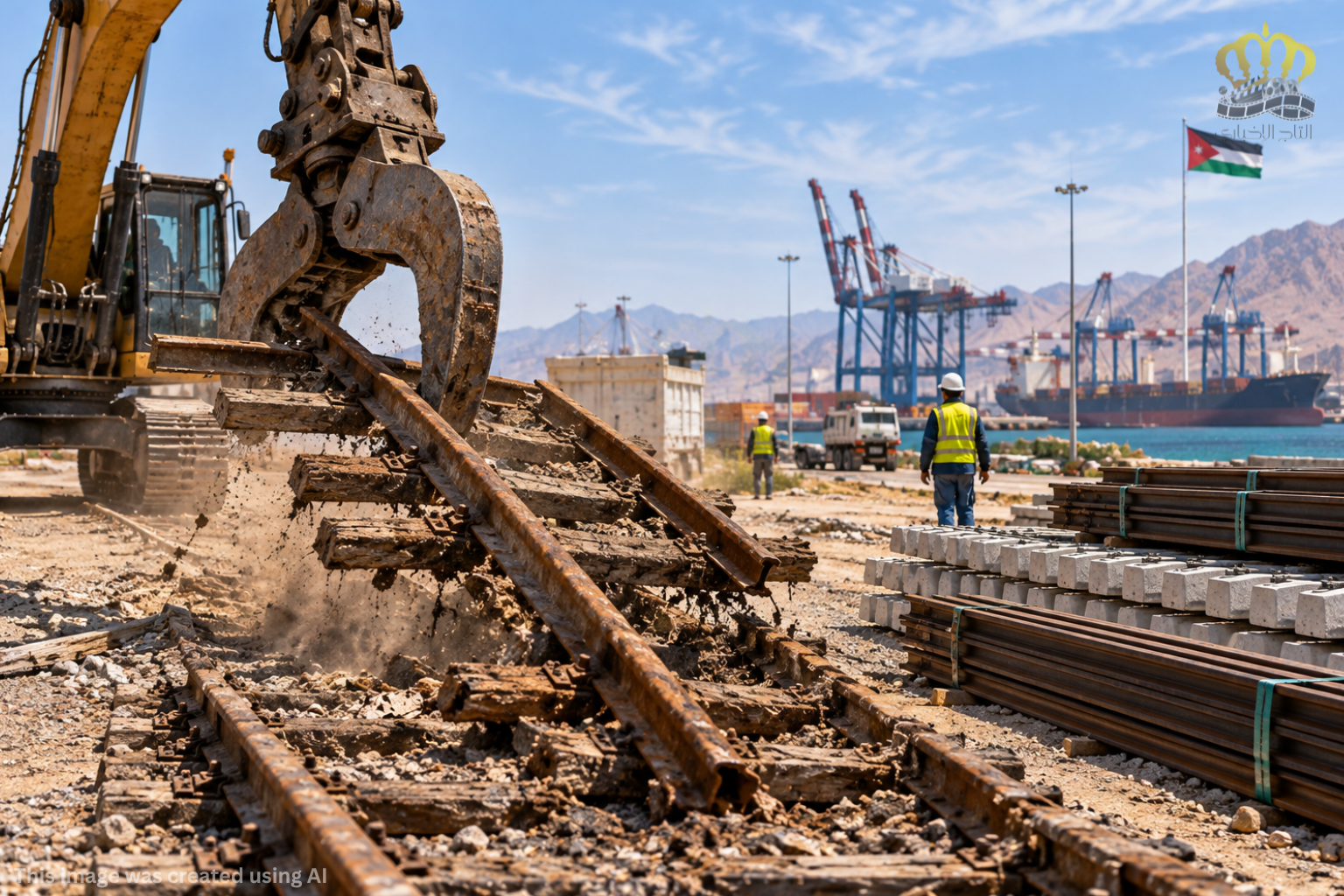
Al-Taj News – Director General of the Aqaba Railway Company Yasser Kreishan said that work has begun to remove tracks belonging to the company as part of the Jordanian-Emirati agreement aimed at establishing railway networks in Jordan, including a line to transport phosphate to the ports.
Kreishan confirmed in press statements that the railway being removed is neither historic nor related to the Hejaz Railway, noting that the Emirati side has undertaken to develop between 65% and 70% of the project, which requires Jordan to remove the section it will implement, as the existing tracks do not comply with the specifications required for the new project.
He pointed out that the new project requires higher standard specifications, greater speeds, and larger loads, which necessitated removing the old tracks and beginning construction of the new ones, noting that some sections of the track are more than 40 years old.
Kreishan indicated that the removal of the track came after the tender was issued and submitted to by numerous companies, and was awarded to the best company among the bidders, explaining that the track was sold as scrap iron, not as a railway track.
He explained that the track on which maintenance work has begun had not been used for years, after its operation was halted following the relocation of the port to the southern shore.
The Aqaba Port Railway Project is based on an equal partnership between Jordan, represented by the Jordan Phosphate Mines Company, Arab Potash Company, Government Investments Management Company, and the Social Security Investment Fund, and the United Arab Emirates, represented by “Limaad Holding,” the sovereign investment platform affiliated with the Abu Dhabi Government.
The Aqaba Port Railway Project is considered the largest of its kind in the Kingdom in terms of rail transportation. It is being implemented through a joint Jordanian-Emirati investment estimated at approximately $2.3 billion and includes a package of major sub-projects in infrastructure, including railway routes, tunnels, and bridges, in accordance with optimal international standards in the railway sector.