

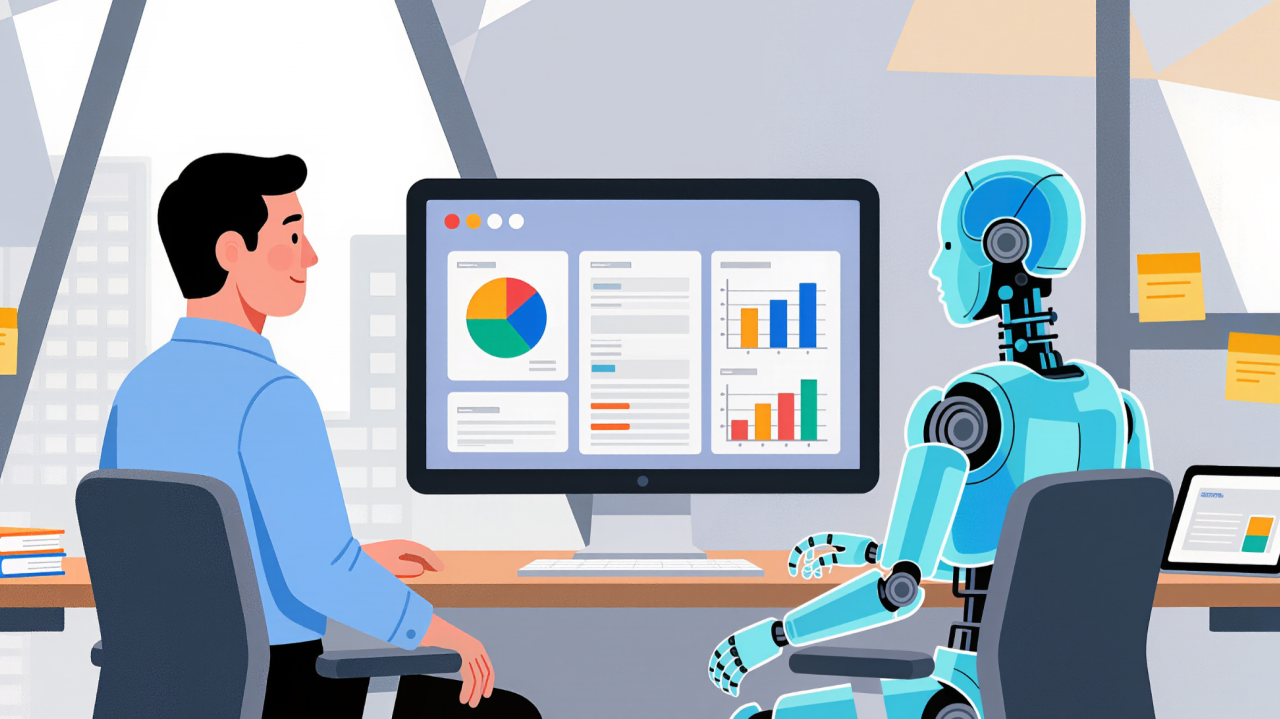
The Teacher Facing Competition from Artificial Intelligence… Does Rote Learning Remain Out of the Race?
Al-Taj News – Ruba Al-Daghamin
Educational expert and consultant Dr. Mohammad Abu Amara said that the rapid developments in technology and artificial intelligence have imposed a new reality on the education sector, noting that teachers who rely on rote learning and lecturing methods have become outside the circle of competition, amid changes in the nature of learning and the multiplicity of sources of knowledge available to students.
Abu Amara added during his interview with “Al-Taj News” that teachers must develop their tools and capabilities in dealing with technology, artificial intelligence, and modern teaching methods, so that they can keep pace with students’ needs and maintain their role in the educational process.
He explained that traditional education is no longer suitable for the nature of today’s students, who have become accustomed to rapid and interactive learning, noting that modern curricula have become more dependent on technology and combine sound, image, and movement, which requires teachers to make use of these tools inside the classroom.
He pointed out that this reality has imposed a change in the nature of the teacher’s role, which has shifted from being the focus of the educational process and the source of information to a guide and facilitator of learning, while the student has become a seeker of knowledge.
He explained that information is no longer confined to the textbook or the teacher, but has become available through the internet, educational platforms, and artificial intelligence tools, making the teacher’s primary task helping the student access accurate and correct information, verify it and document its sources, in addition to teaching them the ethics of dealing with information.
Abu Amara warned that a teacher who lacks the ability to deal with technology, the internet, and artificial intelligence tools will face difficulty keeping pace with and assisting their students, particularly with the spread of tools such as “ChatGPT,” which students use in various fields, including solving homework assignments.
He stressed the importance of teachers developing the teaching methods they use, explaining that traditional methods are no longer attractive to students who have become accustomed to fast content and short clips through phones and smart devices.
He called on teachers to use modern educational strategies and methods that help attract students’ attention, transform rigid material into more interactive material, and connect abstract concepts to everyday life, thereby enhancing the student’s benefit from the lesson.
He noted that among the most prominent challenges facing teachers today are developing their teaching skills, educational strategies, and classroom management, in addition to the ability to deal with students amid the multiplicity of sources of knowledge available to them.
Abu Amara concluded by stressing that the teacher is no longer the sole source of information, but has become a “facilitator of education,” emphasizing that failing to keep pace with technology and artificial intelligence and to develop skills will place the teacher outside the circle of competition in the future of education.